The Cultural Overhead: What Asian-American B2B Leaders Actually Pay to Build Cohesive Multicultural Teams
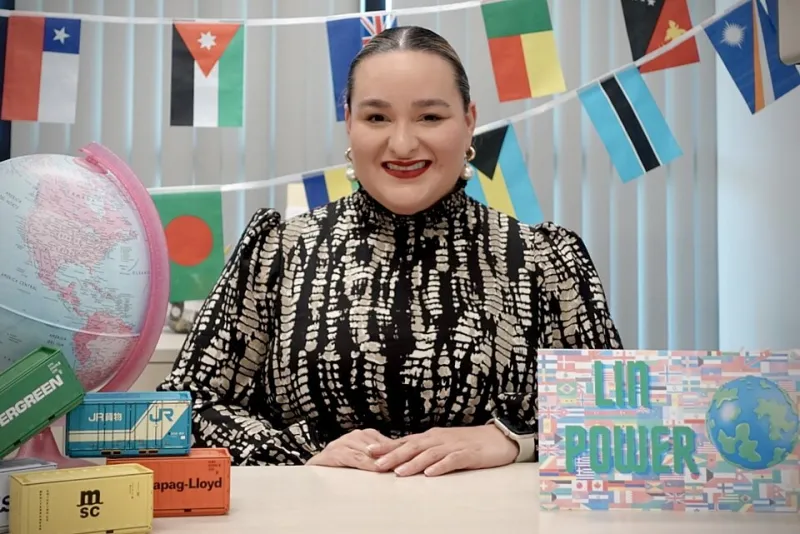
Photo: Intercultural Leadership, CC BY-SA 4.0, via Wikimedia Commons
When Vietnamese-American and Asian-American founders talk candidly about scaling their B2B operations, a particular frustration surfaces again and again — one that rarely makes it into mainstream business coverage. Building a high-functioning, multicultural team costs more than it should. Not because diversity itself is expensive, but because the systems, norms, and institutional structures that surround the American corporate workplace were not designed with these leaders in mind.
This is what might be called the cultural overhead: a diffuse but measurable set of costs borne disproportionately by Asian-American B2B firms as they recruit, retain, and integrate talent across cultural lines. It shows up in HR budgets, in the uncompensated hours of senior leaders who serve as informal translators between worlds, and in the higher-than-average turnover that follows when those translation efforts fall short.
For companies like those Hoang Gia LLC works with — firms that are actively bridging business communities and building cross-cultural partnerships — this overhead is not theoretical. It is a recurring line item that most financial models simply fail to capture.
Recruitment Friction That Compounds Over Time
The challenge begins before a single offer letter is signed. Asian-American-led B2B firms often operate at an intersection of professional cultures: they may conduct business in both English and Vietnamese, serve client bases that span multiple ethnic communities, and operate with leadership norms that blend American directness with more consensus-oriented decision-making traditions.
This creates a recruitment paradox. Candidates who fully understand the cultural context of the organization are often drawn from a narrower pool, while candidates hired from the broader market may require significantly more onboarding investment to reach baseline cultural fluency. Neither path is without cost.
Recruiters working with Asian-American firms frequently note that job descriptions require additional drafting cycles to accurately represent the organization's culture without inadvertently narrowing the applicant field. Interview processes tend to run longer, as hiring managers work to assess not only technical competency but also a candidate's adaptability to a multicultural work environment. These are not inefficiencies — they are deliberate investments. But they are investments that competing firms operating in more culturally homogeneous environments do not have to make.
The Invisible Labor of Cultural Translation
Once a team is assembled, a second category of overhead emerges: the ongoing work of cultural translation. This is perhaps the least visible and most underappreciated cost in the entire equation.
In many Asian-American B2B organizations, senior leaders — and sometimes mid-level managers — spend considerable time mediating between employees who bring different cultural frameworks to communication, conflict resolution, and professional expectations. A disagreement that might be resolved quickly in a more culturally uniform environment can require careful, context-sensitive navigation when the parties involved hold fundamentally different assumptions about hierarchy, directness, or face-saving.
This mediation work is real work. It demands emotional intelligence, cultural knowledge, and time. Yet it almost never appears in a job description, and the people who perform it are rarely compensated for it explicitly. In effect, culturally fluent leaders within these organizations subsidize team cohesion through their own labor — a subsidy that quietly erodes bandwidth that might otherwise go toward strategy, client development, or innovation.
The retention implications are significant. When the employees doing the heaviest cultural translation work begin to experience burnout, their departure creates a disproportionate organizational disruption. The institutional knowledge they carry — about how to manage particular relationships, how to interpret communication styles, how to keep cross-cultural workflows running smoothly — is extraordinarily difficult to replace.
Retention Disparities and the Cost of Turnover
Research on workforce dynamics consistently shows that employees from underrepresented groups, including Asian Americans, leave organizations at higher rates when they do not see a viable path to leadership or when they feel their cultural identity requires suppression in the workplace. For Asian-American B2B firms, this creates a particular irony: the very employees who are most culturally aligned with the organization's identity may be most sensitive to signals — however unintentional — that their advancement is constrained.
Turnover is expensive under any circumstances. Industry estimates typically place the cost of replacing a mid-level employee at between fifty and two hundred percent of their annual salary, when recruiting, onboarding, and productivity losses are fully accounted for. For Asian-American B2B firms that have invested additionally in cultural integration during onboarding, the cost per departure runs higher still.
Addressing this requires more than competitive compensation. It requires a deliberate and visible commitment to multicultural leadership development — one that signals clearly to employees at every level that cultural fluency is valued, not merely tolerated.
Reframing Overhead as Infrastructure
The most effective Asian-American B2B leaders are those who have stopped treating cultural overhead as an unfortunate tax and started treating it as organizational infrastructure. The distinction matters enormously.
Infrastructure is something you invest in because it enables everything else. When a firm develops genuine institutional capacity for cross-cultural team management — through structured onboarding, explicit communication frameworks, and leadership pipelines that reward cultural fluency — it builds something that competitors cannot easily replicate.
Consider what a truly high-functioning multicultural team enables in a B2B context: the ability to serve clients across multiple communities with authentic fluency, the capacity to enter new markets without the steep learning curve that homogeneous teams face, and the organizational resilience that comes from having multiple cultural lenses applied to every major decision. These are not soft benefits. They translate directly into client retention, market expansion, and risk mitigation.
Firms that have made this transition tend to share a few common practices. They formalize the cultural translation work that was previously invisible, creating defined roles or structured programs that acknowledge and compensate it. They build mentorship and sponsorship systems that connect emerging multicultural leaders with senior advocates. And they measure team cohesion not just through engagement surveys, but through the quality of cross-functional collaboration on actual client deliverables.
Turning the Investment Into Competitive Differentiation
For Vietnamese-American and Asian-American B2B leaders, the path forward is not to minimize cultural overhead but to make it productive. Every dollar spent on genuine cross-cultural team development is a dollar invested in organizational capabilities that are, in the current market, genuinely scarce.
The firms that will define the next generation of Asian-American B2B success are those that treat multicultural team-building not as a compliance exercise or a social obligation, but as a core strategic discipline — as fundamental to long-term performance as financial management or client acquisition.
At Hoang Gia LLC, this perspective shapes how we approach every client engagement. Bridging business and building success means understanding that the bridge itself requires maintenance, investment, and skilled engineering. The leaders who grasp this earliest will find that what once felt like an overhead burden has become their most defensible competitive advantage.